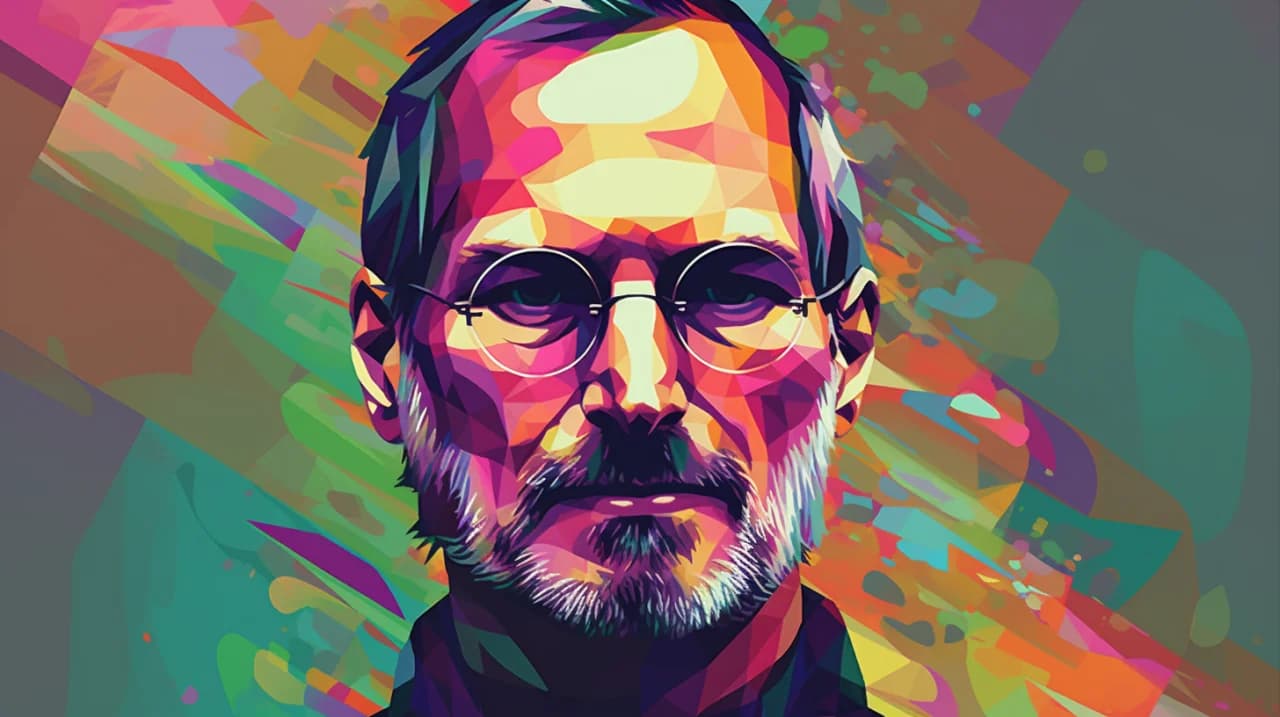

In 1983, a 28-year-old Steve Jobs stood in front of a room of designers in Aspen and made a series of claims that sounded detached from reality.
Computers would be everywhere. People would spend more time with them than cars. They would become the dominant medium of communication. And design would determine whether humanity embraced them.
At the time, almost no one in that room owned a computer.
Four decades later, every one of those claims has become baseline reality.
The takeaway is not that Jobs predicted the future. He understood how technology becomes part of human life before the market recognizes it.
That is the lens worth applying now. Because we are at a similar moment with AI.
A New Medium Is Emerging
What Jobs saw in 1983 was not a product shift. It was a medium shift.
Computers were moving from specialized machines into everyday objects. Not tools for experts, but environments people would live inside.
That distinction matters. When a new medium emerges, it reshapes behavior before it reshapes business models. Electricity changed industry. Television changed culture. Computing changed how we think, create, and communicate.
Today, AI is following the same pattern. The mistake most people are making is treating it as a feature. It is not a feature. It is the foundation of a new interaction model.
When a new medium emerges, it reshapes behavior before it reshapes business models. AI is not a feature. It is the foundation of a new interaction model.
The Insight Most People Still Miss
Jobs understood that technology adoption is not technical. It is emotional. In that Aspen talk, he made a point that still holds: these machines would be built regardless of how they looked. The question was whether they would be objects people wanted to live with. That was not aesthetic commentary. That was strategy.
When technology crosses into the mainstream, design becomes infrastructure. It removes intimidation. It builds trust. It invites participation. The Macintosh proved it. The graphical interface and mouse did not just improve computing. They made it accessible.
The same shift is happening again.
Natural language is doing for software what the mouse did for the computer. AI is not powerful because of what it can compute. It is powerful because of how easily humans can interact with it.
The Real Prediction: Computers as a Communication Layer
Jobs made another claim that sounded even less plausible. Computers would become the dominant medium of communication. At the time, email barely existed. The internet was not consumer-facing. Most business communication still relied on paper, phones, and fax.
Yet today, communication is almost entirely mediated through digital systems. Email. Messaging platforms. Social networks. Digital identity. Jobs saw that computers would not just process information. They would sit between people. They would become the layer through which relationships are formed, maintained, and acted upon.
We Are Crossing That Line Again
AI is now pushing computing into its next phase. For the past forty years, software has been something you operate. You open an application. You input information. You execute tasks. Even as systems became connected, the model stayed the same. Humans orchestrated the work.
That model is breaking. A new layer is forming above software: agents.
Agents Are the Next Layer of Intelligence
Agents change the structure of computing. They do not wait for instructions in the same way traditional software does. They observe context. They interpret intent. They coordinate across systems. They execute actions. Instead of navigating five different tools, the user defines an outcome. The agent handles the workflow.
This is not incremental. It is architectural. Software is shifting from tools to intelligence systems that operate on your behalf.
In that same 1983 talk, Jobs described something even more prescient. He imagined computers that could capture a person's "underlying spirit," their thought processes and knowledge, and make that intelligence available to interact with others. He was describing, forty-three years ago, what we now call agents: systems that carry your context, understand your intent, and act on your behalf.
That is exactly the premise behind what we are building at Revolv. Not another AI tool that automates tasks, but an intelligence layer that understands the relationships and context behind every professional decision. The thesis is simple: the professionals who compound their network intelligence over time will outperform those who just move faster. Jobs saw that computers would sit between people. We believe the next step is building systems that understand what happens between them.
The market reflects it. Gartner predicts that 40% of enterprise applications will embed task-specific AI agents by 2026, up from less than 5% in 2025. That is not gradual adoption. That is a medium shift. But here is the part that mirrors the AI adoption gap: four in five enterprises have adopted agents in some form, yet only one in nine runs them in production. The pattern repeats. The technology arrives before the organizational thinking catches up.
Four in five enterprises have adopted AI agents. Only one in nine runs them in production. The technology arrives before the thinking catches up.
The Shift Beneath the Shift
When this happens, the center of value moves. Not to better apps. Not to more features. To the intelligence layer that sits above everything else. That layer depends on one thing: context. Not just data. Context. Who you know. What has been said. What matters. What should happen next.
Most systems today capture fragments. CRMs capture transactions. Email captures communication. Social platforms capture identity. None capture relationship context in motion. And that is where the next category forms.
Relationship Intelligence
If computers became the communication layer, agents become the coordination layer. But coordination requires understanding. Not just of data. Of people. Decisions do not happen in isolation. They happen through networks. Through trust. Through timing. Through context that rarely gets written down.
This is the gap. And it is widening as systems become more automated.
Agents that understand workflows will be useful. Agents that understand relationships will be indispensable.
The Pattern Repeats
Jobs saw the pattern early. A new medium emerges. The interface changes. Adoption accelerates. Behavior shifts. New categories are built. We are at that same inflection point.
AI is not the story. Agents are not the story. The story is what happens when intelligence becomes embedded in how we work, communicate, and make decisions.
What Are You Building the Intelligence Layer Around?
The companies that win this era will not be the ones that add AI to existing software. They will be the ones that define what the intelligence layer actually operates on. Most are building it around tasks. Faster summaries, faster code, faster reports. A few are building it around context. The relationships, timing, and trust signals that determine whether a decision lands or stalls.
That is the bet we are making with Revolv. Not an AI that does things faster, but an intelligence layer that understands the people and relationships behind every decision. Jobs saw that computers would sit between people. The question now is whether your systems understand what happens between them.
Ask yourself: if your most important deal, hire, or partnership depends on a relationship your tools cannot see, what is your AI actually optimizing?